Chimney repair in Pleasanton splits into masonry work, wood-structure work, and appliance work, and the fix depends on which part failed. Mortar chimney repair addresses the joints between bricks or the crown at the…
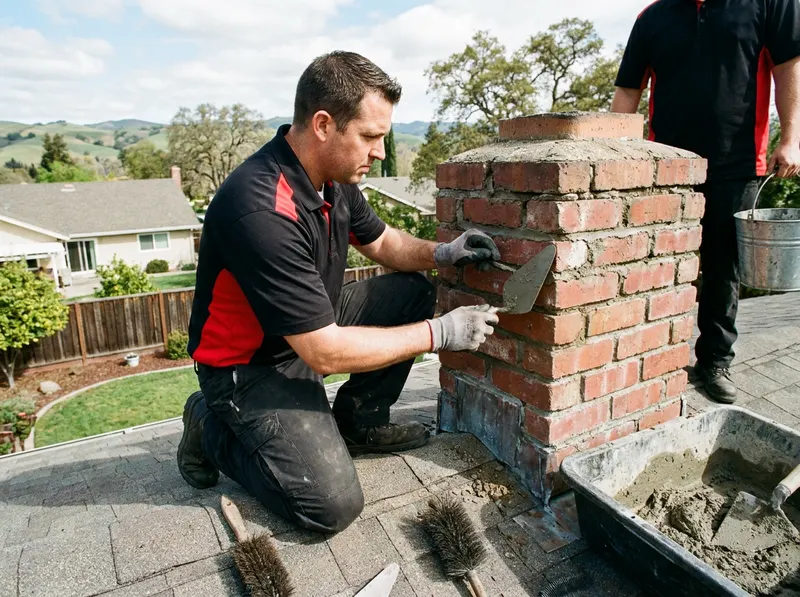
Chimney repair in Pleasanton splits into masonry work, wood-structure work, and appliance work, and the fix depends on which part failed. Mortar chimney repair addresses the joints between bricks or the crown at the top: when mortar crumbles, water tracks into the joints, and on Pleasanton's older Downtown and Kottinger Ranch homes that freeze-thaw and winter rain cycle widens the gaps season after season. Repointing rakes out the failed joint to a consistent depth and packs in fresh mortar; a cracked crown is patched or recast. This is the right repair when the brick and flue are sound but the joints have opened.
Many Pleasanton chimneys are not full masonry stacks, they are factory-built metal fireplaces inside a framed wood chase, common in Vintage Hills, Val Vista, Birdland, and the newer Ruby Hill and Laguna Oaks builds. Repair of the wood structure of a chimney becomes necessary when the chase siding or flashing leaks and the wood underneath the mortar or trim starts to soften. If a probe sinks into the framing or the sheathing feels spongy, the chimney might have some wood rot, and wood-structure chimney repair replaces the affected framing, sheathing, and flashing so the chase carries weight and sheds water again. Wood rot repair is the correct path when the leak has already reached the framing; mortar-only work does not fix a rotted chase.
Factory-built units carry their own rules. Lennox fireplaces and other manufactured appliances are repaired with the parts and clearances the maker specifies, refractory panels, gaskets, dampers, and blowers are matched to the model rather than substituted with masonry-style patching. Servicing a manufactured Lennox unit is component replacement, not repointing, which is why the inspection identifies the appliance type first.
Every repair begins with an inspection graded to CSIA standards. A Level 1 inspection covers the readily accessible portions of the chimney and connected appliance and suits routine repair diagnosis. A Level 2 inspection is used after a property sale, a chimney fire, or when the wood chase and concealed areas need review, and it includes video scanning of the flue interior per NFPA 211. Photos of the crack, soot line, creosote, or rotted wood are shown to the homeowner before any repair is quoted, the scope reflects what the camera and probe find, not a fear-driven upsell. Work is performed by bonded and insured crews, and drop cloths protect the hearth and living-room floor during masonry and framing work.
Every job gets a firm, written price after a free on-site visit.
Tell us about your chimney repair job in Pleasanton and we'll send a clear, written quote, usually the same day.
 Fluekeeper Chimney Sweep